Conventional outsourcing in the past was quantified in terms of headcount. More people were assumed to mean more success. However, in the current fast-paced world, this trend of outsourcing may soon reveal its flaws. Having a lot of people around does not always mean success. Those who take pride in being successful usually work differently.
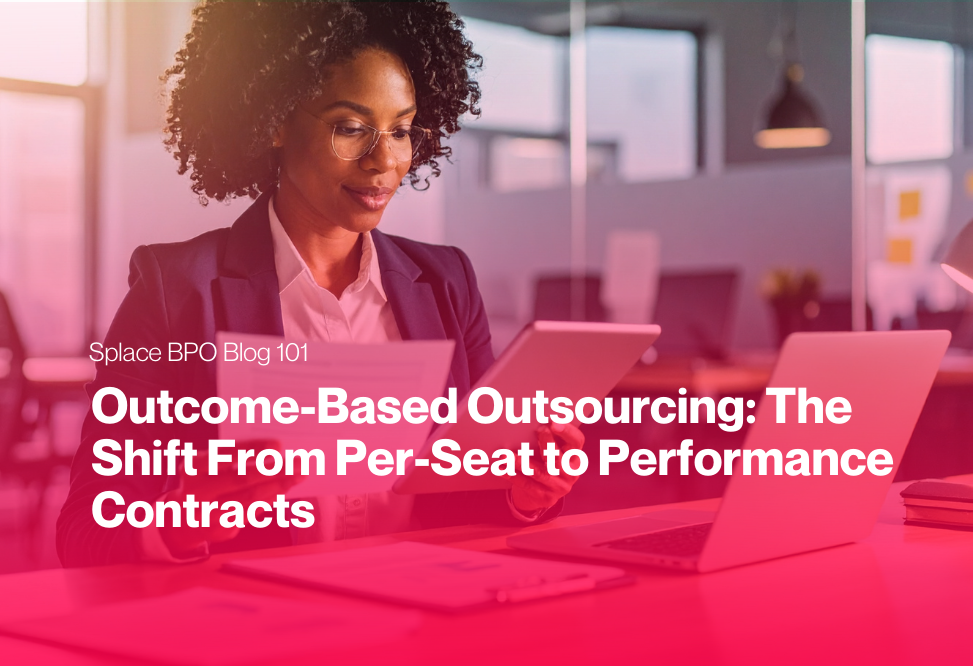
The answer comes with outcome-based outsourcing, which changes the focus from the number of seats to value. Performance, results, and aligning incentives between the buyer and provider – this is where it’s headed.
What Is Outcome-Based Outsourcing?
Outcome-based outsourcing contracts a service provider on mutually agreed results, rather than the number of agents or hours employed. These could be anything from revenue growth and lead conversion to customer satisfaction scores or operational efficiency.
Unlike traditional models, where success is measured by headcount, outcome-based contracts reward impact. In other words, providers are motivated to provide tangible business results, not just staff a desk.
The key aspects include:
Objectives – clearly set along with the indications.
Agreed upon performance metrics and reporting
Joint responsibility from the client and provider
Why Companies Are Making the Shift
Traditional licensing per-seat models often foster inefficiencies, such as:
Teams can be overstaffed or understaffed.
Productivity may vary without affecting compensation.
Customers do not have much if any insight into the real performance.
Outcome-based outsourcing turns that on its head. Providers have the incentive to optimize processes, invest in the right talent, and innovate to achieve the goals. Instead of paying for people, companies pay for results-alignment of cost with real business outcomes.
Benefits of Performance-Driven Contracts
Shifting to outcome-based outsourcing will yield very real benefits for clients and providers.
Aligned incentives: Success is measured the same way on both sides.
Efficiency of operations: The providers are outcome-oriented and, in many cases, drive smarter workflows with speedier delivery.
Predictable ROI: Business value is far more visible to the client than staffing numbers.
Flexibility: Teams can dynamically scale with results, not headcount.
With this model, outsourcing is no longer a cost center but rather a strategic driver of growth and measurable performance.
How Providers Adapt to Outcome-Based Models
Outsourcing providers can no longer operate according to traditional methods in order to succeed under performance-driven contracts.
Investing in skilled talent, not seat fillers.
This would also involve using technology and analytics to track progress for better workflow optimization.
Proactively identify challenges and opportunities to meet KPIs
The change-embracing provider does not just become a service partner but a trusted business partner to their client, creating measurable business impact.
Conclusion:
Outcome-based outsourcing shifts the focus from paying for seats to paying for results, aligning incentives, driving efficiency, and fostering collaboration. By emphasizing measurable outcomes, both clients and providers benefit from accountability, innovation, and tangible business impact, making outsourcing a true strategic advantage rather than just a cost.
FAQS
1. What are some differences between an OBC and an outsourcing contract?
Instead of charging clients on a per-agent or per-hour basis, the terms of the agreement call for the client to pay in relation to the agreed outcomes. Measuring success is through the use of KPIs and not the staff
2. Are outcome-based contracts appropriate for all forms of outsourcing arrangements?
They work best in those tasks which can be measured for their outcome, such as sales, customer support, generating potential clients, or operating efficiency.
3. What are the issues companies may face as they move from non-performance based outsourcing?
It’s important to have proper definition of measurements and establishment of effective reporting systems. Good communications between the client and provider are important if success is to be achieved.
About Splace BPO
Splace BPO empowers brands by providing offshore professionals who are not only highly skilled but also trained to excel in an AI-driven business landscape. By combining human expertise with future-ready capabilities, we help businesses scale smarter, adapt faster, and stay competitive in a rapidly evolving market.
📧 info@splacebpo.com
🌐 www.splacebpo.com