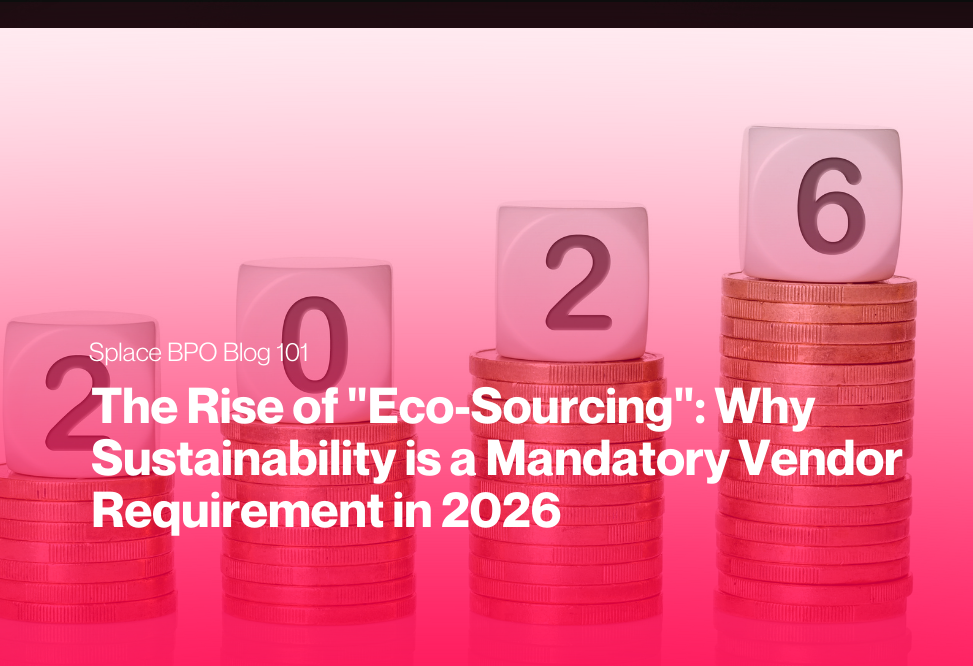
Sustainability has become more of a business requirement, less of a branding activity or a nice-to-have project. By the time 2026 approaches, sustainability is quickly becoming an expected part of doing business. When concern for the environment is shifted from awareness to accountability, firms will assess how their company partners are selected.
This is why “eco-sourcing” has emerged, as a focus on suppliers that meet measurable sustainability criteria. What was optional has since become mandatory.
What Eco-Sourcing Really Means
Eco-sourcing encompasses more than just sourcing from environmentally friendly brands. This is a larger look into how vendors operate, measure impact, and manage resources across their supply chains.
But in essence, the process of eco-sourcing examines whether a vendor:
Minimizing environmental impact in operations and logistics
Uses responsible materials, energy, and waste practices
Provides transparency around sustainability claims
It's about actual, verifiable practices, not marketing language.
Why Sustainability Is Becoming Mandatory
Several forces are pushing sustainability from preference to policy. Regulations are tightening, customers are more informed, and investors increasingly view environmental risk as business risk.
Organizations now recognize that working with unsustainable vendors can lead to compliance issues, reputational damage, and long-term cost exposure. Eco-sourcing helps mitigate these risks while aligning operations with evolving expectations.
How Vendor Evaluation Is Changing
Previously, the traditional vendor selection criteria included a strong emphasis on cost, speed, and capabilities. In 2026, sustainability is emerging as another concurrent criterion.
Procurement teams are starting to:
Ensure that RFPs and contracts include environmental criteria
Documentation and reporting of sustainability practices
Encourage or favor long-term partnership agreements that can align with ESG considerations
This trend represents an important shift toward more responsible and future-proof supply chains.
The Business Value of Eco-Sourcing
It is not compliance, but tangible business value that comes with eco-sourcing. Sustainable vendors tend to be much more resource-efficient, have less wastage, and adjust to the regulatory environment much quicker.
Companies that practice eco-sourcing enjoy better supply chain resilience, stronger brand trust, and alignment with customer and investor expectations. Through sustainability, stability is driven rather than being considered a cost center.
Conclusion:
The rise of eco-sourcing reflects a fundamental change in how businesses define value and responsibility. By 2026, sustainability will no longer be optional; it will be a basic qualification to partner. Companies that embed eco-sourcing into vendor selection today will reduce risk, strengthen trust, and build supply chains designed for the future. Those that don't may find themselves left behind by regulation, market pressure, and shifting expectations.
FAQS
1. Does eco-sourcing only matter to large corporations?
No. Small and mid-sized companies will have to abide by the rules of sustainability, especially while collaborating with bigger companies.
2. Does eco-sourcing raise costs?
Even though some sustainable approaches entail costs in the beginning, other areas, such as efficiency or business relationships, result in saved costs in the long run.
3. How can companies start adopting eco-sourcing?
First, establish sustainability criteria, start asking vendors for transparency, and work towards incorporating the data into purchasing.
About Splace BPO
Splace BPO empowers brands by providing offshore professionals who are not only highly skilled but also trained to excel in an AI-driven business landscape. By combining human expertise with future-ready capabilities, we help businesses scale smarter, adapt faster, and stay competitive in a rapidly evolving market.
📧 info@splacebpo.com
🌐 www.splacebpo.com