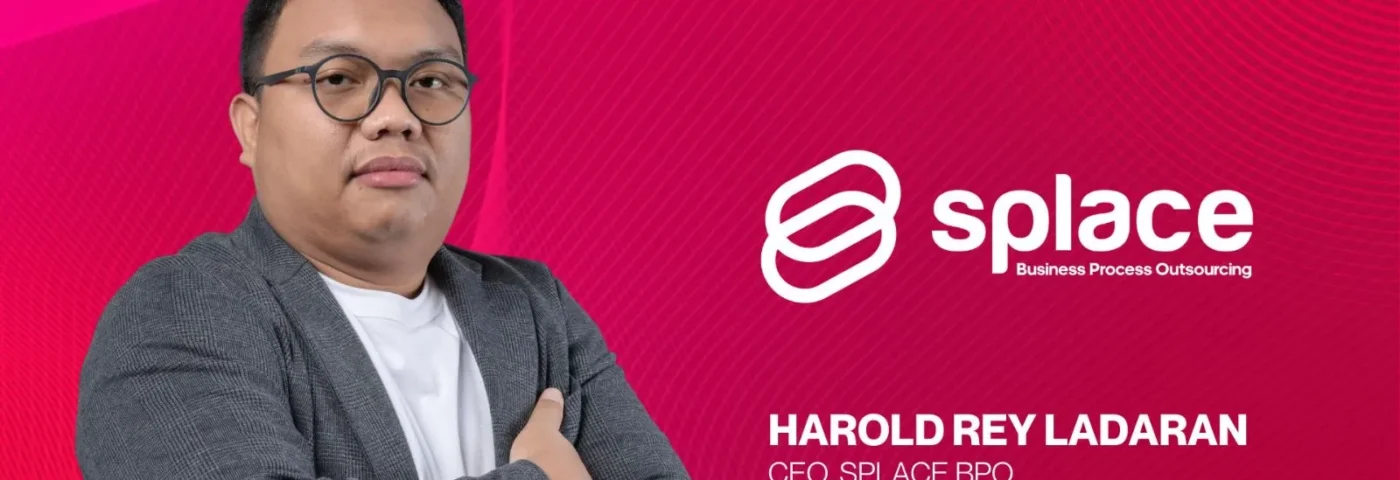
Foreign companies hiring in the Philippines have long run the same frustrating playbook: one vendor to recruit, a second to handle employment compliance, a third to provide workspace. Three contracts. Three points of failure. No single party accountable when something breaks. Harold Ladaran watched this pattern repeat — and decided to build a different structure. His answer is Splace, a Davao City-based workforce platform that combines managed teams, employer of record, and secure seat leasing under one SLA and one invoice. For anyone studying BPO founder Philippines outsourcing leadership, the Splace model is worth examining closely — not for the story, but for the structural decisions behind it.
From Early Career to a Clear Gap in the Market
Before founding Splace, Ladaran worked inside the Philippine outsourcing industry long enough to see the gap between how the sector was sold and how it actually operated. The pitch was always efficiency and cost reduction. The reality, for clients, was often a tangle of vendor relationships with no one holding the full picture.
The compliance gaps were consistent. A recruiter would place workers. A separate EOR provider would handle payroll and statutory obligations — sometimes. Workspace was whoever had available seats. When something went wrong — a labor dispute, a data handling question, a sudden attrition spike — the client was left arbitrating between vendors who each owned only a slice of the problem.
Ladaran's response was not to optimize one slice. It was to own the whole thing.
[VERIFY WITH HAROLD: Specific roles, industries, employers, and timeline from career prior to founding Splace — required before publishing this section to publishable standard.]
Why Davao City — and Why It Matters to Clients
Splace is headquartered in Davao City. That is a deliberate operational choice, not a default.
Metro Manila dominates the Philippine BPO conversation, but it also carries Metro Manila costs and Metro Manila attrition rates. Davao offers a different operating environment: a younger professional workforce, lower cost of living for staff, and a city government with a sustained track record of infrastructure investment and public order. For workers, quality of life is meaningfully better than what a comparable salary buys in the capital. That matters to retention. Retained teams perform better for clients.
Splace holds CCAP accreditation — the Contact Center Association of the Philippines, the industry's primary credentialing body. That accreditation is a signal of operational credibility, not a marketing badge. It means Splace has met documented standards for how a Philippine BPO should operate.
[VERIFY WITH HAROLD: Specific attrition figures, Davao talent pool data, and any additional infrastructure details the team is comfortable publishing.]
The Leadership Philosophy Behind Splace
Ladaran's operating philosophy is not complicated to state, but it is harder to execute than most BPO operators manage: the people doing the work are the product. If you underinvest in them, you underdeliver to clients. The two are not in tension — they are the same variable.
The structural tension in BPO is real. Clients push for lower cost per seat. That pressure, unmanaged, flows downhill onto worker compensation, workspace quality, and management investment. The result is the race-to-the-bottom model that has given offshore outsourcing a mixed reputation in some industries.
Ladaran resolved this tension by building the three-service bundle in a way that makes worker investment visible and non-negotiable. Compliance infrastructure, managed workspace, and embedded team management are not optional add-ons. They are the product. A client cannot buy a cheaper version by stripping them out.
Treating Staff as the Product, Not the Overhead
The Ops Pod model is the clearest expression of this philosophy. A pre-configured team of 5 to 15 FTE — built for CX, Finance Ops, or Sales Support — ships with management included. Clients are not handed a roster and asked to figure out oversight from twelve time zones away. The management layer is part of what Splace delivers.
That structure protects workers from the ambiguity that produces attrition. It protects clients from the coordination cost that produces errors. Both outcomes trace back to the same decision: treat staff investment as a line item that improves client outcomes, not one that competes with them.
[VERIFY WITH HAROLD: Specific compensation benchmarks, benefits programs, or staff development details the team is prepared to publish.]
Building the Three-Service Bundle: Solving the Fragmented Vendor Problem
The problem Splace was built to solve has a specific shape. A US, Australian, or European company hiring Filipino workers typically accumulates three separate vendor relationships: a recruiter, an EOR provider, and a workspace operator. Three contracts. Three invoices. Three different parties to call when something goes wrong — each of whom can point to one of the other two.
Splace collapses that into one relationship, one SLA, and one invoice. The three services are not a menu of optional extras. They are a single architecture, designed to be accountable end-to-end.
Ops Pods: Managed Teams Deployed in Approximately 30 Days
An Ops Pod is a pre-configured team of 5 to 15 FTE, built for one of three functions: customer experience, finance operations, or sales support. The deployment timeline is approximately 30 days.
Speed matters here for a specific reason. Scaling companies rarely have 90 days to stand up a new function. The Ops Pod model is designed for operators who need a team running — not a hiring process starting — within a month. Management is embedded from day one. Clients are not left to build oversight structures after the fact.
EOR at $249 Per Month: The Compliance Layer
Employer of Record means Splace becomes the legal Philippine employer for the client's workers. Payroll, statutory contributions — SSS, PhilHealth, Pag-IBIG — and labor law compliance sit with Splace, not with the client. The client does not need to establish a Philippine legal entity to hire here.
Splace can onboard workers under EOR in as little as 72 hours. The price point is approximately $249 per month per worker. For context, comparable EOR services from providers like Deel or Remote benchmark at approximately $599 per month. The difference is material for companies hiring at scale.
ISO 27001 certification and HIPAA compliance are currently in progress. They are not yet achieved, and Splace does not claim them as current credentials.
Secure Seat Leasing: Infrastructure That Meets Client Requirements
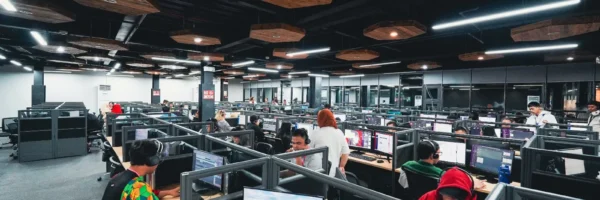
The Davao workspace is compliance-documented and network-segmented. For clients in regulated industries — FinTech, HealthTech, E-commerce Ops — physical infrastructure is not a secondary concern. Data handling requirements, audit trails, and physical security protocols are part of how those businesses operate, and their offshore partners need to meet the same standard.
The seat leasing layer is what makes the EOR and Ops Pod layers credible for regulated-industry clients. It is the physical foundation the compliance stack sits on. ISO 27001 and HIPAA certifications are in active pursuit — when achieved, they will formalize what the infrastructure is already designed to support.
Outsourcing as a Growth Decision, Not a Cost-Cutting Tactic
The standard outsourcing conversation starts with cost reduction. Ladaran's model is positioned for a different conversation: companies that want to build a Philippine team that scales with them, not a cost center they manage at arm's length.
That distinction is operational, not rhetorical. Dedicated teams, consistent management, compliance infrastructure, and a single accountable vendor are what strategic hiring in the Philippines actually requires. Founders and VPs of Operations hiring 10 to 150 Filipino workers need a partner who owns the full picture — not a vendor list they have to coordinate themselves.
The fragmented alternative — recruiter, EOR, workspace, managed separately — is not cheaper when you account for the coordination cost, the compliance exposure, and the attrition that comes from workers who feel like they belong to no one in particular.
What Ladaran Built — and What Comes Next
Splace is a Davao-based platform pursuing ISO 27001 and HIPAA certifications as the next formal layer of its compliance infrastructure. The founding thesis — one relationship, one SLA, one invoice — remains the organizing principle.
The structure Ladaran built is the point. Not a collection of services that happen to be sold together, but a single accountable system designed for the specific problem foreign companies face when they hire in the Philippines without a local partner who owns the whole picture.
[VERIFY WITH HAROLD: Any specific growth plans, expansion timelines, headcount figures, or service announcements that can be stated publicly before publishing this section.]
Ready to See How Splace Structures a Philippine Team for Your Operation?
An Ops Audit is a structured 20-minute review of your current or planned Philippine workforce setup — what you have, what is missing, and where the compliance or management gaps are. You leave with a clear picture of what a single-vendor structure would look like for your team size and function.
Book an Ops Audit at splacebpo.com — no commitment, no pitch deck, just a direct conversation about your specific situation.