Harold Rey Ladaran did not build Splace BPO in Davao City by accident. The choice was deliberate — a founder-level decision about where to root an operation, and why that root matters. The structure he built around it reflects a specific thesis about Philippine BPO founder leadership outsourcing: that accountability belongs with the operator, not the client. Everything about how Splace is organized — its services, its location, its pricing model — follows from that premise.
Why Davao, Not Manila
Manila is the default for Philippine outsourcing. It is where the large enterprise BPO infrastructure is concentrated, where the brand-name campuses are, and where most offshore hiring conversations begin and end.
Ladaran chose Davao City instead. The business logic is straightforward. Davao's talent market is less saturated by large-enterprise BPO culture, which means workers are not cycling through multinational call centers before they arrive at your team. The cost-of-living differential between Davao and Metro Manila creates less upward wage pressure without requiring a reduction in compensation quality. The result is a workforce that is easier to retain and deeper to invest in.
Proximity matters here. Building in Davao is not just a cost decision — it is a commitment to a specific talent community. Ladaran's operating model depends on Splace holding accountability for team performance, not passing it to the client. That kind of accountability requires genuine proximity to the people doing the work.
Building a People-First Operating Model
“People-first” is often a values statement. At Splace, it is a structural choice.
The model Ladaran built does not offload team management to the client. Splace retains accountability for performance, compliance, and culture. The client directs outcomes. Splace manages the team that produces them. That distinction is the foundation of the Ops Pods model — pre-configured managed teams in CX, Finance Ops, and Sales Support, deployed with Splace holding the SLA.
When the operator owns accountability, talent development is not optional. It is the mechanism by which the operator keeps its commitments. Investment in people is not a benefit program — it is how the SLA gets met. Lower ramp time and more consistent output follow from that logic, not from a policy document.
The Decision to Bundle: One SLA, One Invoice
Most companies hiring offshore workers manage three separate vendor relationships: a legal employer of record, a staffing or managed services provider, and a workspace or infrastructure supplier. Each relationship has its own contract, its own accountability boundary, and its own gap where things fall through.
Ladaran built Splace to collapse those three into one. A single SLA. A single invoice. One accountable party for compliance, management, and workspace.
The friction in offshore hiring does not usually live in the work itself. It lives in the seams between vendors — the compliance question that the EOR says is a management issue, the workspace problem that the staffing firm says is a facilities issue. Bundling removes the client from the middle of those gaps.
Splace's EOR is priced at approximately $249 per month, compared to market comparators in the $599 range. That pricing difference is a signal about how Ladaran positioned the service: not as a premium standalone product, but as infrastructure that makes the broader bundle work.
EOR as Infrastructure, Not Just a Legal Wrapper
Commodity EOR is a compliance product. You file the paperwork, you get a legal employer in-country, and you manage everything else yourself.
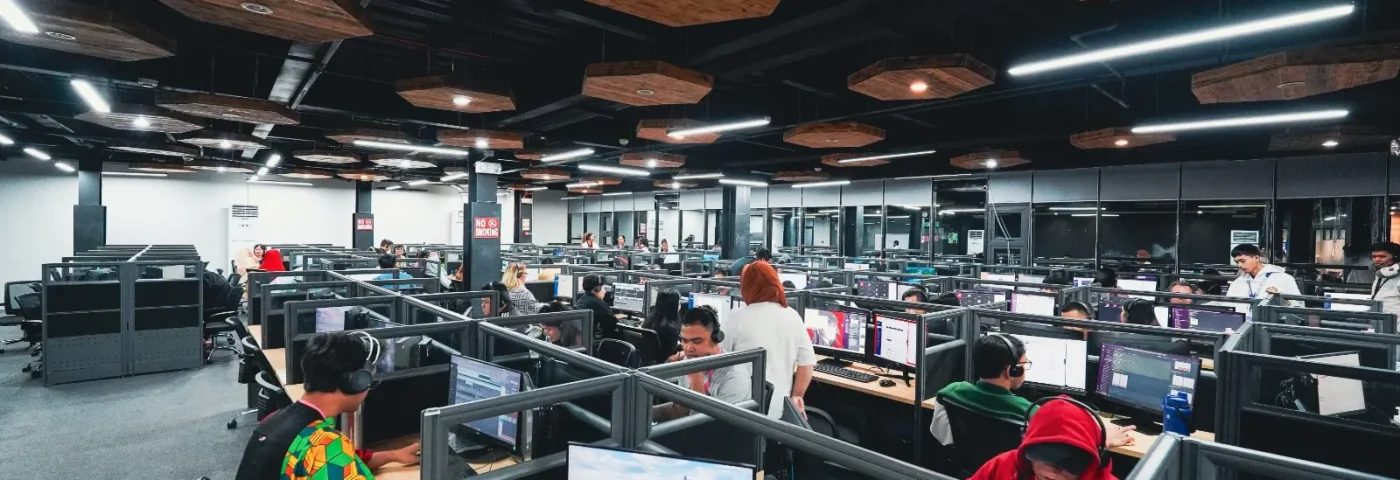
Splace's EOR is different in one important way: it is paired with physical workspace and managed team oversight. The legal employer relationship is not sold in isolation. It is part of a structure where Splace also controls the environment the worker operates in and the team the worker belongs to.
The 72-hour onboarding timeline is a product of that integration. When the EOR, the workspace, and the team management are under one roof, the onboarding sequence does not require coordination across three vendors. The speed is an operational outcome, not a marketing claim.
Splace holds CCAP accreditation. ISO 27001 certification and HIPAA compliance are currently in pursuit — they have not yet been achieved. Clients in regulated industries should factor that into their current evaluation.
Secure Infrastructure as a Competitive Signal
The seat leasing and Infrastructure Hubs component of the bundle exists because Ladaran made a deliberate choice not to leave workspace sourcing to clients.
For FinTech and HealthTech companies handling sensitive data, workspace is not a commodity. Network segmentation, physical access controls, and compliance documentation matter. A client who sources their own workspace independently takes on the compliance risk of that environment. A client whose team operates inside Splace's Infrastructure Hubs does not.
Splace's workspace is compliance-documented and network-segmented. The environment is designed for teams handling data that requires auditability. ISO 27001 and HIPAA certifications are in progress — the infrastructure is being built toward those standards, but clients should not treat them as currently certified.
Controlling the environment is part of how Splace holds accountability for output. If the workspace is outside Splace's control, the SLA has a gap. Ladaran closed that gap by including infrastructure in the bundle.
Leadership Philosophy: Accountability Over Delegation
The traditional BPO model puts the client in the management role. The vendor provides people. The client provides direction, oversight, performance management, and corrective action. The vendor's accountability ends at the hire.
Ladaran built the opposite structure. Splace manages the team. The client directs outcomes. The operational complexity — scheduling, performance, compliance, culture — sits with Splace, not with the client's VP of Operations.
This is not a service-level difference. It is a structural one. It means Splace has to hire and develop team leads who can actually manage, not just coordinate. It means reporting cadences and SLA enforcement are Splace's responsibility to design and maintain. The client is not managing a team remotely. The client is receiving output from a team that Splace is accountable for.
That philosophy does not come from a mission statement. It comes from a founder who understood that the offshore hiring market's real problem is not access to talent — it is accountability for what that talent produces.
What This Means for Companies Scaling Philippine Teams
For a founder or VP of Operations at a US, Australian, or EU company hiring 10 to 150 Filipino workers, the model has concrete operational implications.
- Deployment speed: Ops Pods are designed to be deployed in approximately 30 days. The pre-configured team structure is what makes that timeline possible — the client is not building a team from scratch.
- Legal employer complexity: Philippine labor law requires a registered in-country employer. Splace's EOR function handles that relationship, including statutory contributions, employment contracts, and regulatory compliance. The client does not become a Philippine employer.
- Compliance environment: For companies in regulated industries, the Infrastructure Hubs provide a documented, controlled environment from day one. Clients do not need to audit a third-party workspace provider separately.
- Single accountability point: When something goes wrong — performance, compliance, infrastructure — there is one party to call. That is a structural advantage over managing three separate vendor relationships.
From Davao to Global Scale
Splace currently operates across three service verticals: CX, Finance Ops, and Sales Support. Those verticals are not arbitrary. They represent the functions where offshore managed teams produce the clearest, most measurable output — and where the accountability model is easiest to enforce.
Scale, in Ladaran's model, does not require diluting the operating structure. If accountability is embedded in how the teams are built and managed, adding more teams does not reduce the accountability per team. The model is designed to hold at scale in a way that a client-managed offshore model typically does not.
Growth built on that structure is different from growth built on headcount alone.
Ladaran built Splace in Davao because the operating model required it. He structured it around accountability because the market needed it. He bundled the services because clients should not have to manage the seams between their offshore compliance, management, and workspace vendors.
If you are building or scaling a Philippine team and want to see how that model applies to your specific hiring situation, book a 20-minute Ops Audit with the Splace team — it is a diagnostic conversation, not a sales call.